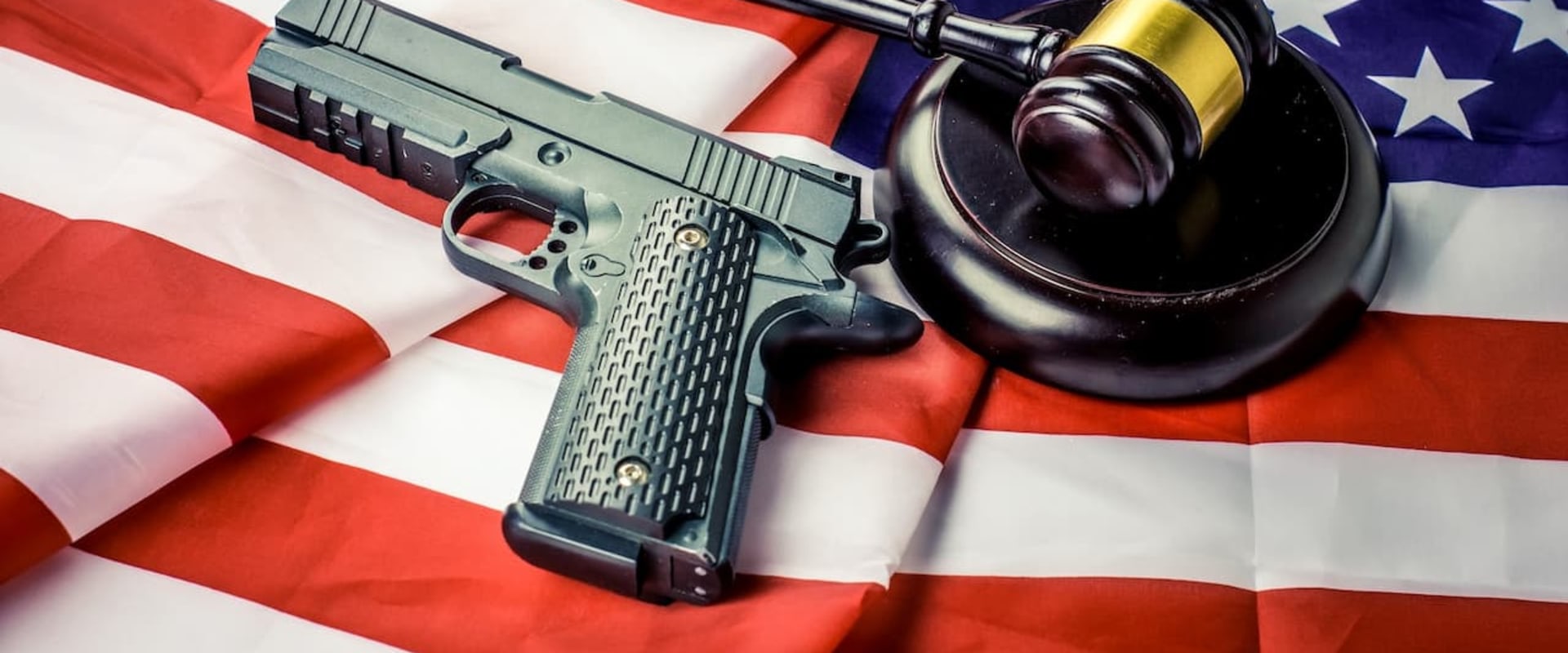
Firearms law in the United States is one of the most complex and frequently litigated areas of American constitutional and statutory law. It sits at the intersection of constitutional rights, federal regulation, fifty different state legal frameworks, and a body of case law that has evolved significantly over the past two decades. For anyone seeking to understand how law governs firearm ownership, purchase, carry, and use in America, a clear overview of the relevant legal framework is essential. This article provides that overview — from the constitutional foundation through federal statute, state law variation, and the landmark court decisions that have shaped the current landscape.
The Constitutional Foundation — Second Amendment Law
The Second Amendment to the United States Constitution reads: "A well regulated Militia, being necessary to the security of a free State, the right of the people to keep and bear Arms, shall not be infringed." For most of American legal history, the scope of this right was contested — particularly whether it protected an individual right to firearm ownership or only a collective right tied to militia service.
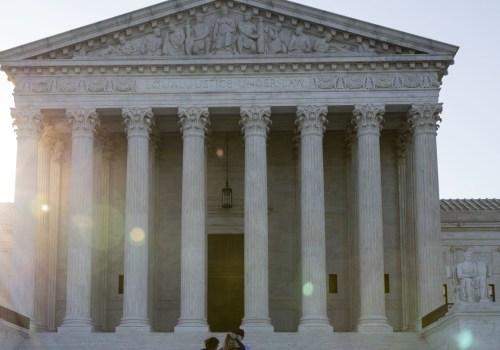
The Supreme Court resolved this question definitively in District of Columbia v. Heller (2008), holding that the Second Amendment protects an individual right to possess firearms for traditionally lawful purposes — including self defense within the home. The Court struck down the District of Columbia's handgun ban and its requirement that lawfully owned firearms be kept inoperable. Importantly, the Court also held that the right is not unlimited — it does not protect a right to carry any weapon for any purpose in any place, and laws prohibiting felons and the mentally ill from possessing firearms, laws forbidding firearms in sensitive places, and laws imposing conditions on commercial sale remain presumptively lawful.
McDonald v. City of Chicago (2010) extended Heller to the states through the Fourteenth Amendment's Due Process Clause, establishing that the individual right recognized in Heller applies equally against state and local governments.
The most recent major development came in New York State Rifle and Pistol Association v. Bruen (2022), in which the Court struck down New York's may-issue concealed carry licensing system. Bruen established a new analytical framework for Second Amendment cases — courts must now evaluate challenged firearms regulations against the historical tradition of firearm regulation in America, rather than applying the interest-balancing tests used in other constitutional contexts. The Bruen decision has generated significant litigation challenging a wide range of state and federal firearms regulations.
Federal Firearms Law — The Statutory Framework
The primary federal statutes governing firearms are the National Firearms Act (1934), the Gun Control Act (1968), and the Firearm Owners Protection Act (1986).
The National Firearms Act (NFA) regulates certain categories of weapons — machine guns, short-barreled rifles and shotguns, suppressors, and destructive devices — through a registration and tax system administered by the Bureau of Alcohol, Tobacco, Firearms and Explosives (ATF). NFA items require registration, payment of a $200 tax stamp, and ATF approval before transfer. The manufacture of new machine guns for civilian sale has been prohibited since 1986.
The Gun Control Act (GCA) of 1968 established the Federal Firearms Licensee (FFL) system — requiring anyone in the business of manufacturing, importing, or selling firearms to obtain a federal license from the ATF. It also established the categories of prohibited persons who may not legally possess firearms — convicted felons, domestic violence misdemeanants, those adjudicated as mentally defective, illegal aliens, and others. All commercial firearm sales by FFL dealers must be accompanied by completion of ATF Form 4473 and a National Instant Criminal Background Check System (NICS) check conducted through the FBI.
When a consumer purchases a firearm online from a licensed retailer, the firearm must be shipped to a licensed FFL dealer near the buyer for transfer — it cannot be shipped directly to the buyer's home. The buyer visits the local FFL dealer, completes Form 4473, passes the NICS background check, and takes possession. Licensed FFL dealers such as Ferrari Firearms and Training LLC, based in Leland, North Carolina, facilitate these federally regulated transfers in compliance with all applicable law.
The Firearm Owners Protection Act (FOPA) of 1986 amended the GCA to add certain protections for gun owners — including the safe passage provision that protects travelers transporting firearms legally through states where they could not otherwise possess them, provided the firearm is unloaded and locked in a container not accessible from the passenger compartment.
State Firearms Law — Fifty Different Frameworks
While federal law establishes a floor of firearms regulation, states are free to enact stricter laws — and many do. The result is fifty distinct legal frameworks that govern firearm possession, purchase, carry, and use within state borders.
Purchase regulations. Some states require waiting periods between purchase and delivery of a firearm — ranging from 3 to 14 days depending on the state. Some states require a state-issued permit or license to purchase a handgun in addition to the federal background check. California, Illinois, Massachusetts, New Jersey, and New York all have purchase permit or license requirements.
Assault weapon restrictions. California, New York, New Jersey, Connecticut, Massachusetts, Maryland, and Hawaii restrict or ban certain semi-automatic rifles and features commonly referred to as "assault weapons." These state laws have faced ongoing constitutional challenges following the Bruen decision.
Magazine capacity limits. A number of states limit magazine capacity — California, Colorado, Connecticut, Hawaii, Maryland, Massachusetts, New Jersey, New York, and Vermont all have limits ranging from 10 to 15 rounds. These laws have also been the subject of post-Bruen litigation.
Concealed carry. Perhaps the most variable area of state firearms law is concealed carry. As of 2026 more than 25 states have enacted constitutional carry — permitless concealed carry for law-abiding adults. The remaining states require a permit, with requirements ranging from straightforward shall-issue systems to more restrictive licensing schemes. A comprehensive overview of concealed carry law and how it varies by state — including the permit process, prohibited locations, and reciprocity agreements — is available through licensed FFL dealers and resources such as the complete concealed carry guide published by Ferrari Firearms.
The Law of Self Defense and Firearms
The legal right to use a firearm in self defense is governed by state law rather than federal law. The two primary doctrines are the Castle Doctrine — which removes the duty to retreat when a person is in their own home — and Stand Your Ground laws — which remove the duty to retreat wherever a person has a legal right to be, present in approximately 35 states.
For any firearm owner, understanding the self defense laws of their state is as important as understanding the firearm regulations themselves. The legal consequences of using a firearm in self defense — whether justifiably or not — can be significant. State-specific legal guidance on self defense and the laws governing lawful firearm use is available through resources such as the self defense guide published by Ferrari Firearms, which covers the legal framework alongside practical guidance on responsible firearm ownership.
The Ongoing Evolution of Firearms Law
Firearms law is one of the most actively litigated areas of American law in 2026. Following the Bruen decision, federal and state courts across the country are evaluating dozens of firearms regulations under the new historical tradition framework — with inconsistent results that are likely to generate further Supreme Court review. Areas of active litigation include restrictions on firearm possession by persons subject to domestic violence restraining orders, restrictions on young adults between 18 and 21, bans on certain semi-automatic rifles, and the federal prohibition on firearm possession by unlawful drug users.
For citizens, practitioners, and anyone seeking to understand how American law governs one of the most widely exercised constitutional rights, staying informed about both federal and state law — and the rapidly developing case law interpreting both — is essential. Firearms law is not static, and what is lawful in one state may be a serious criminal offense in another.